How to Build Topic Clusters That Strengthen Small Business SEO
Want your small business to rank higher on Google and attract more potential customers? Topic clusters can help you turn scattered blog posts into a powerful SEO strategy that builds authority and improves search visibility.
Many small businesses struggle to rank because their content lacks structure, relevant keywords, and strong internal links. Publishing more blogs alone won’t solve the problem if your content doesn’t address what your audience searches for.
In this guide, discover how to create effective topic clusters, select relevant pillar topics, develop supporting content, and improve internal linking. Follow proven SEO strategies to boost website visibility, attract consistent organic traffic, and achieve better search rankings with insights from an experienced SEO professional in Kolkata.
Understanding Topic Clusters in SEO:
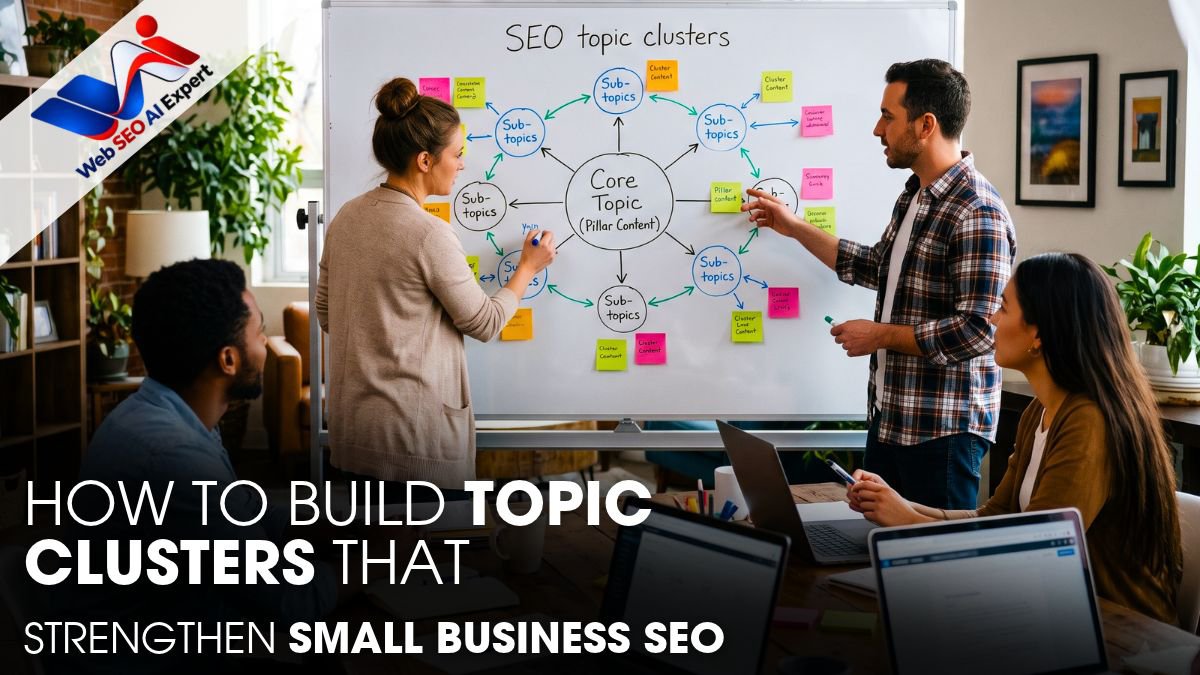
Think of a topic cluster as a well-organized collection of website pages that explore one central subject from different angles. Rather than publishing unrelated blog posts, you connect relevant articles through a logical content structure. This approach helps visitors find useful information while giving search engines clearer signals about your website’s subject coverage.
A typical topic cluster contains three essential components: a pillar page, supporting cluster pages, and contextual internal links. The pillar page covers the broader subject, while supporting articles answer specific questions in greater detail. Internal links connect these resources and create meaningful relationships between URLs.
For example, a digital marketing agency might build a pillar page around Small Business SEO. Supporting articles could cover keyword research, local SEO, technical SEO, on-page optimization, and content marketing.
A properly structured cluster can help your business:
- Establish stronger topical relevance across related subjects.
- Improve crawlability and content discovery.
- Create better navigation pathways for visitors.
- Distribute internal link equity across important pages.
Building multiple articles with internal links is not enough to improve rankings. Google prioritizes relevance, quality, usefulness, and technical accessibility. A trusted SEO company in Kolkata can help create valuable, user-focused content and a strong linking strategy that improves search visibility without relying on manipulative SEO practices.
Finding the Right Topics for Your Business:
Successful topic clusters start with understanding what your potential customers actually search for. Before creating content, identify their problems, questions, purchasing concerns, and information requirements. Your keyword strategy should connect these search behaviors with your business offerings.
Start by classifying keywords according to search intent. Informational queries seek answers, commercial queries compare available solutions, transactional queries indicate purchase readiness, and navigational queries target specific websites or businesses. Understanding these differences helps you choose the right content format for each search.
Next, use Google Keyword Planner, Google Search Console, Ahrefs, or Semrush to discover relevant keyword opportunities. Examine search volume, keyword difficulty, competition, and business relevance. Don’t chase high-volume keywords blindly. A long-tail keyword such as “technical SEO checklist for small business websites” might attract fewer searches but bring visitors with more specific requirements.
Competitor analysis can reveal additional opportunities. Examine competing websites’ ranking pages, content coverage, headings, and keyword patterns. Look for unanswered questions, outdated explanations, and topics that competitors cover superficially.
During keyword research, focus on:
- Identifying primary keywords and related search terms.
- Reviewing People Also Ask questions.
- Comparing keyword difficulty with your website’s authority and capabilities.
- Discovering content gaps in competing websites.
- Mapping keywords to specific search intents.
Maintain a well-organized keyword-to-URL spreadsheet to ensure each page targets a distinct search intent. This approach minimizes keyword cannibalization and strengthens your content strategy. An experienced SEO expert in Kolkata can help optimize keyword mapping and improve your website’s organic search performance.
Building an Effective Topic Cluster:
Once you identify suitable keywords, organize them into a clear content architecture. Choose a pillar topic that directly supports your business expertise and provides enough depth for several supporting articles.
For example, a web development company could select “Website Optimization for Small Businesses” as its pillar topic. Supporting articles might explore Core Web Vitals, image compression, mobile responsiveness, website security, and technical SEO audits.
Give each supporting article a distinct purpose. Before creating a new URL, compare its target keywords and search intent with your existing pages. If two articles answer essentially the same question, combine them into one comprehensive resource. If they address different user requirements, keep them separate.
Create a content mapping document that records:
- Pillar topic and proposed URL.
- Supporting topics and primary keywords.
- Secondary keywords and related entities.
- Search intent and content format.
- Existing content and publication status.
- Relevant internal linking destinations.
Before commissioning new articles, review your existing website content to identify pages that need updating, consolidation, or improved internal linking. A qualified SEO specialist in Kolkata can help small businesses avoid duplicate content, maximize publishing budgets, and achieve better search performance.
Creating SEO-Friendly Cluster Content:
A strong topic cluster needs useful content, not articles that repeat the same keywords. Every page should solve a specific problem, provide accurate information, and offer something readers can apply.
Start with the pillar page. Explain the central subject comprehensively, introduce its important concepts, and direct visitors toward relevant supporting resources. Use a logical H1, H2, and H3 hierarchy to organize information and improve readability.
When writing supporting articles, explore individual topics with greater technical depth. For example, an article about Core Web Vitals should explain Largest Contentful Paint (LCP), Interaction to Next Paint (INP), and Cumulative Layout Shift (CLS), along with their measurement methods and optimization techniques.
Google recommends these good-performance thresholds:
- LCP: 2.5 seconds or less.
- INP: 200 milliseconds or less.
- CLS: 0.1 or less.
Use PageSpeed Insights and Chrome UX Report data to evaluate real-user performance. Lighthouse can help identify issues such as render-blocking resources, oversized images, and excessive JavaScript execution.
Optimize title tags, meta descriptions, H1 headings, URL slugs, and image alt attributes using relevant keywords naturally. A reliable SEO service provider in Kolkata can help create valuable, well-structured content with original insights, expert explanations, and accurate technical recommendations that deliver meaningful value to readers.
Connecting Content through Internal Links:
Internal links connect your cluster pages and help search engines discover important content. They also help visitors navigate related resources and pass link equity between relevant URLs.
Begin by linking each supporting article to its corresponding pillar page. Add contextual links between supporting articles whenever they provide useful additional information. For example, an article about keyword research could link to resources explaining search intent and on-page SEO.
Pay attention to anchor text. Use descriptive phrases that tell readers what they will find after clicking. Instead of writing “click here,” use something specific, such as “small business keyword research strategies.”
Follow these technical practices:
- Use crawlable HTML anchor elements with valid href
- Link directly to canonical, indexable URLs.
- Avoid unnecessary redirect chains.
- Maintain consistent URL formatting.
- Find and fix orphan pages.
- Give important pages sufficient internal link coverage.
Tools such as Screaming Frog SEO Spider and Sitebulb can help you audit internal links, crawl depth, broken URLs, and canonical inconsistencies.
You can organize URLs into descriptive directories, such as /small-business-seo/keyword-research/, to improve site structure. However, a logical URL structure alone cannot establish topical relevance. If you’re searching for an “SEO expert near me”, choose a professional who understands how meaningful contextual links and high-quality content strengthen topical relevance.
Measuring and Improving Topic Cluster Performance:
Publishing your topic cluster doesn’t complete the SEO process. You need regular performance analysis to understand which pages attract visitors, which keywords generate impressions, and where your content needs improvement.
Use Google Search Console to monitor clicks, impressions, average positions, CTR, and search queries for individual URLs. Compare supporting pages to identify which topics attract organic visibility and which pages struggle to gain traction.
Google Analytics 4 provides additional insights into organic landing-page sessions, engagement, lead submissions, and conversion events. Connect these metrics with actual business outcomes instead of measuring success through page views alone.
Monitor these important indicators:
- Organic clicks and impressions.
- Non-branded keyword visibility.
- Search CTR and average position.
- Qualified leads and conversion rates.
- Internal linking coverage and crawl errors.
Pay particular attention to pages that receive impressions but generate few clicks. Review their search intent alignment, title tags, and meta descriptions. Similarly, investigate pages that experience ranking declines or lose organic traffic.
Regular content audits help an SEO agency in Kolkata maintain strong search performance by updating outdated information, fixing broken links, merging overlapping articles, and identifying content gaps. Also, review canonical tags, XML sitemaps, robots directives, and HTTP status codes to ensure search engines crawl and index the correct URLs.
Conclusion:
Building topic clusters gives small businesses a structured approach to content development, keyword targeting, and internal linking. Instead of publishing disconnected blog posts, create interconnected resources that address genuine customer questions and demonstrate expertise.
Start with relevant pillar topics, develop supporting articles, and establish meaningful internal links. Combine search-intent analysis with technical SEO practices to create a crawlable, logically organized website.
Ready to boost your website’s rankings and attract more qualified traffic? Partner with Web SEO AI Expert, a trusted SEO professional in Kolkata, to identify growth opportunities, strengthen your online visibility, and achieve measurable SEO results. Contact us today and take your business growth to the next level!